
SEO is not a monolith. It is a playbook you adapt to your market, your model, and your growth goals. Whether you run a neighborhood service crew or a coast‑to‑coast ecommerce brand, understanding local vs. national SEO is how you stop guessing and start winning. In this guide, we unpack local vs. national SEO in plain language, show you what drives rankings in each arena, and map decisions to outcomes.
Ro•Sham•Bo Creative is a marketing agency based in Rapid City businesses trust to turn theory into traction. We plan, build, and manage programs that scale from one location to nationwide reach. If you are weighing local vs. national SEO or searching for SEO partners that deliver, you are in the right place.
What Local SEO Is (and Why It Converts)
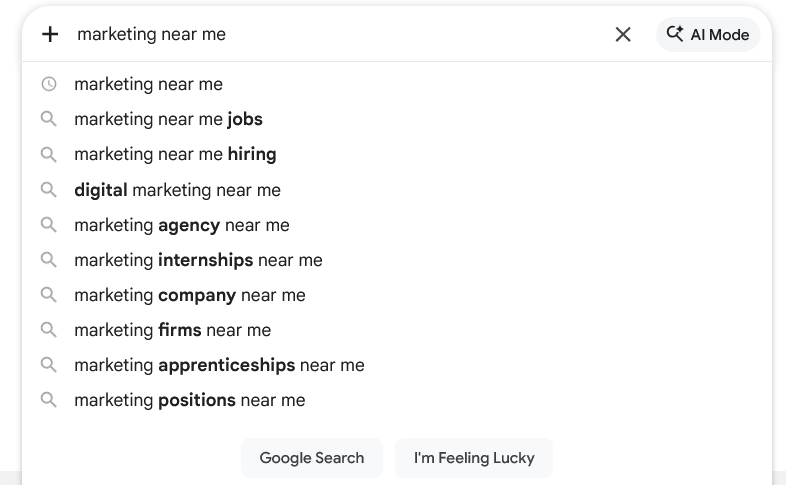
Local SEO makes you visible for searches with nearby intent. Think “plumber near me,” “pizza delivery in Austin,” or “best dentist in Denver.” The goal is simple: connect people in a defined city or service area with your business right when they are ready to call, click, or walk in.
Core components that move local rankings and revenue:
- Google Business Profile optimization: Claim it, complete it, and keep it current. Nail categories, hours, services, and service areas. Upload fresh photos and FAQs. Post updates and offers. Keep your name, address, and phone number consistent everywhere.
- Local citations: Maintain accurate listings on Yelp, Apple Maps, Bing Places, and vertical directories. Consistency validates your location data and builds trust with search engines.
- Reviews and reputation: Generate a steady stream of high-quality reviews on Google and third-party sites. Respond to feedback. Reviews do not just influence rankings, they drive conversion.
- Localized on‑page SEO: Build location pages for each city or service area. Embed maps, add local schema, and publish content that references neighborhoods, landmarks, and community involvement.
- Proximity and relevance signals: Structured data, clean NAP, and content aligned to local queries help you surface in the Map Pack and local organic results.
Why this hits so hard in Rapid City (and any market you serve):
- High‑intent exposure: The Map Pack captures people looking for directions, calls, and bookings right now.
- Manageable competition: You compete in a defined market, not the entire country. Your path to the top gets shorter.
- Conversion‑ready traffic: Local searches convert at higher rates than broad informational queries.
- Cost‑efficient growth: For service businesses, retail, and multi‑location brands, local SEO produces measurable leads without breaking budgets.
If you are comparing local SEO vs national SEO for a single‑market operator, start local, win local, then expand. That is how marketing leaders grow efficiently.
What National SEO Is (and How It Scales)
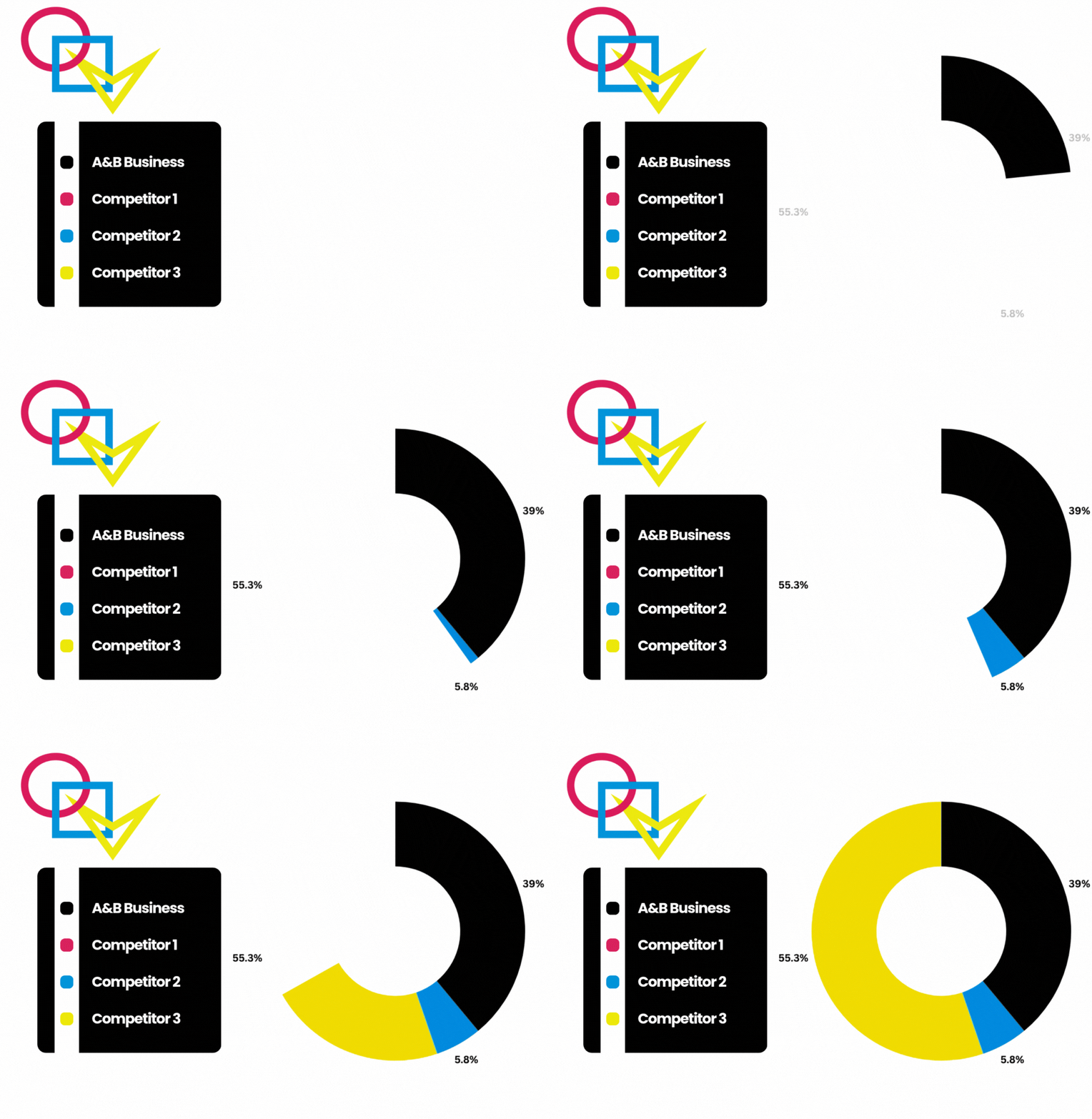
National SEO targets rankings across the United States for non‑geo‑modified queries like “project management software,” “running shoes,” or “how to file an LLC.” You are competing for attention wherever the search happens, building authority that can win thousands of keywords over time.
Core components that define a strong national SEO strategy:
- Advanced keyword research: Segment by intent (informational, commercial, transactional), map terms to the funnel, and prioritize by impact and effort. Build pillars and long‑tails you can actually own.
- Content strategy and topical authority: Create a hub‑and‑cluster architecture. Publish comprehensive, credible resources that satisfy search intent and demonstrate first‑hand expertise.
- Technical SEO: Make your site fast, crawlable, and well‑structured. Optimize Core Web Vitals, internal linking, canonicalization, sitemaps, and schema. Manage indexation and duplicate content at scale.
- Link acquisition and digital PR: Earn high‑quality backlinks through content worth citing, strategic partnerships, and media outreach. Authority wins national SERPs.
- Brand signals and E‑E‑A‑T: Strengthen brand visibility, author credentials, and transparent policies. Experience, expertise, authoritativeness, and trustworthiness are not buzzwords; they are ranking inputs.
Why brands invest in SEO national programs:
- Scalable acquisition across markets without paying per click.
- Greater brand visibility and share of voice in competitive categories.
- Compounding returns as content and authority grow.
- Diversified traffic that reduces dependence on paid media.
When you weigh national SEO vs local SEO, remember this: national builds the brand and the moats; local converts the demand closest to revenue. The best programs do both in sequence.
Local vs. National SEO: What Actually Differs
Both rely on relevance, authority, and clean tech. The levers - and the scorecard – are different. Here is a quick view of local vs. national SEO differences that matter in planning.
| Dimension | Local SEO | National SEO |
| Audience & geography | Radius, city, or service area; proximity matters | Nationwide reach: location secondary unless intent is local |
| Ranking drivers | Proximity, Google Business Profile, reviews, citations, local on‑page signals | Domain authority, intent‑matched content, technical performance, high‑quality links, topical authority |
| SERP features | Map Pack, localized organic, local “People also ask” | Featured snippets, product carousels, knowledge panels, news |
| Primary metrics | Map Pack rankings, calls, direction requests, messages, review velocity, local conversions | National keyword rankings, non‑branded traffic, engagement on pillars/products, assisted conversions, backlink growth |
| Time to impact | Faster wins via profiles, reviews, location pages | Longer runway for content depth, authority, and links |
In practice, local vs national SEO is not a cage match. It is a relay. Local execution helps you dominate your service areas. National content and links lift your entire domain. The handoff is where growth gets exciting.
How to Choose: Local vs. National SEO (and When to Blend)
Start with your market, your model, and your timeline. Then match effort to impact.
- Assess goals and audience:
- If customers visit your location or you deliver within a set radius, prioritize local. That is the fastest path from search to sale.
- If you sell nationwide or offer digital services, invest in a national SEO strategy that builds authority and reach.
- Evaluate competition:
- Local: Audit the Map Pack and top local organic results. Compare reviews, categories, photos, and citation consistency. Find gaps like missing services or thin content.
- National: Analyze category leaders’ content depth, technical strength, and link profiles. Scope the work required to earn snippets and page one positions.
- Budget, resources, and timeline:
- Local can deliver quick wins with focused work on profiles, reviews, and location pages.
- National requires heavier investment in content, technical improvements, and link earning. The payoff compounds.
- When to blend:
- Multi‑location brands: Pair Google Business Profiles and location pages with national content hubs to win local and broad informational searches.
- Ecommerce with showrooms or service add‑ons: Use local pages for discovery and national content to educate and capture demand.
- Common pitfalls:
- Chasing national keywords too soon when revenue depends on nearby customers.
- Publishing templated location pages that add no unique value.
- Ignoring technical debt while scaling content, causing index bloat and cannibalization.
If you are still wrestling with local vs national SEO, here is a rule of thumb: capture high‑intent demand close to revenue first, then build the content engine that expands your addressable market.
Rapid City SEO That Punches Above Its Weight

Local SEO works because it lines up intent, proximity, and trust. In Rapid City, South Dakota, and beyond, well‑optimized profiles and location pages put you in front of people ready to act. Add steady reviews and locally relevant content, and flywheel forms: better visibility brings more customers; more customers bring more reviews; results stack up.
National SEO still matters. Content hubs, technical excellence, and authoritative links grow your domain’s reputation so you can compete for tougher queries. In the debate of local SEO vs national SEO, the best answer for most brands is “both,” sequenced and resourced for ROI. That is the approach we run every day as a South Dakota SEO partner built for outcomes, not vanity metrics.
Ro•Sham•Bo Creative: Strategy, Execution, and SEO Management That Scales
We build SEO programs that map to business outcomes. Our team blends technical expertise, content strategy, and local optimization to create durable, measurable growth. Whether your priority is local marketing Rapid City dominance or expanding nationwide, we have you covered.
What we deliver:
- Local foundations that convert: Google Business Profile setup and optimization, citation management, review generation and response frameworks, and hyper-local content for services and blogs.
- National SEO strategy with teeth: Advanced keyword research, topic clustering, editorial calendars, and on‑page optimization that builds topical authority at pace.
- Technical SEO you can feel: Site audits, Core Web Vitals improvements, crawl budget and indexation management, structured data, and scalable internal linking systems.
- Analytics and SEO management: Custom dashboards that connect rankings and traffic to leads, calls, pipeline, and revenue. Clear attribution. No black boxes.
Proof in the results:
Explore a few of our favorite case studies, establishing our clients for SEO success.

- 67.4% more ranking keywords
- 94.4% more keywords in Google’s Top 10
- Increased organic search results by 274%

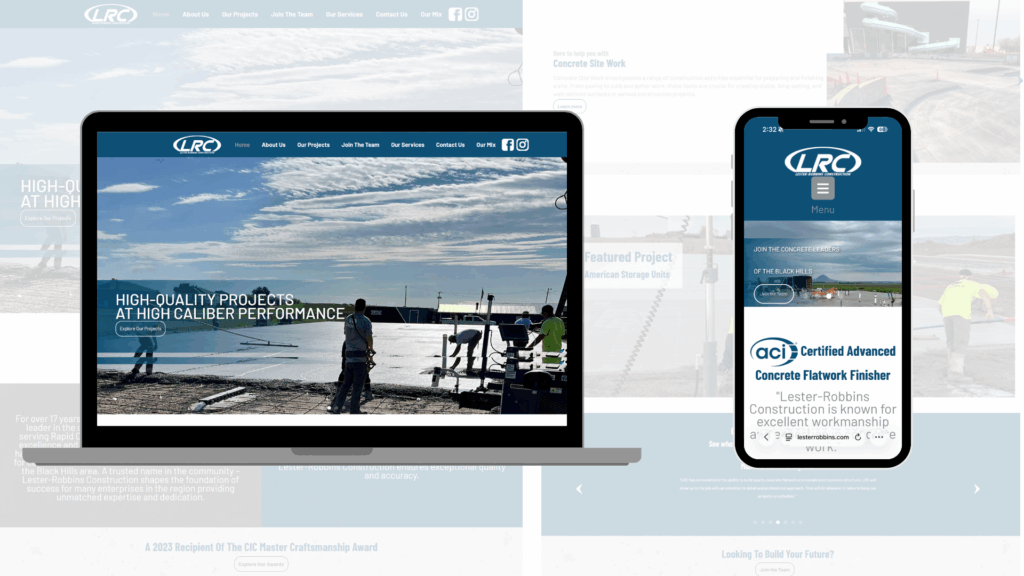
- Now ranking #1 in search engines for “Rapid City Concrete Contractors” queries
Frequently Asked Questions
Often, yes. Competing locally usually means fewer competitors and faster wins with profiles, reviews, and location pages. In dense metros and competitive niches, you still need consistent review generation and differentiated service content to stand out. The calculus changes when you compare local SEO vs SEO at a national scale - authority takes longer, but the upside grows.
Absolutely. Many brands run blended programs: location pages and profiles to capture nearby demand, paired with pillars and resources to build authority. Avoid cannibalization by giving each page a distinct purpose and keyword set. This is the practical path through local vs. national SEO complexity.
Local improvements like Google Business Profile optimization and steady reviews can show gains in 30–90 days. National SEO typically takes 4–9 months as content and authority mature. Solid technical fixes accelerate both.
Yes. Create unique, valuable pages for each service area with localized copy, case studies, FAQs, and coverage details. Avoid thin templates. Pair with a well‑optimized Google Business Profile and strong internal linking.
For local: Google Business Profile Insights, call tracking, and local rank trackers. For national: Google Analytics, Search Console, and enterprise rank tracking. In both cases, use UTM parameters and conversion goals to attribute leads and revenue. Robust SEO management keeps all of this stitched together.
Your Next Move | SEO is a Marathon, NOT a Race
If you are debating local vs. national SEO, here is your framework: capture high‑intent local demand first, then scale authority with a national SEO strategy that builds compounding value. Ro•Sham•Bo Creative partners with businesses across the United States from our home base in Rapid City to turn change into growth.
- Request an SEO assessment: We review your current visibility, technical health, and the competitive landscape.
- Choose your track: Local, national, or blended based on your market and resources.
- Launch a roadmap: We prioritize low‑effort, high‑impact wins and build toward long‑term authority with transparent milestones and reporting.
Ready to move? Connect with Ro•Sham•Bo Creative to put a precise, ROI‑focused plan to work. Whether you need local marketing Rapid City traction or a nationwide push, we will help you win the conversation on local vs national SEO, align on national SEO vs local SEO prioritization, and execute with the kind of speed and clarity that compounds.