

If you've been running Google Ads for a while, you know the drill. Just when you think you've got your campaigns dialed in, Google rolls out another update, introduces a shiny new AI feature, or recommends handing over even MORE control to the algorithm.
Cool. Cool, cool, cool. 😑
Google Ads has come a long way from choosing keywords, writing a few ads, setting your bids, and calling it a day. Today, AI influences everything from which searches trigger your ads to the messaging people see and how much you're willing to pay for a potential conversion.
Some of these changes open up exciting opportunities. Others? Well, let's just say we're glad someone is keeping an eye on things.
So, what's actually changing, and what should businesses pay attention to? Let's break it down.
AI Is Taking a Bigger Seat at the Table

AI is becoming a major part of how Google Ads campaigns operate. From finding new search opportunities to customizing ad copy and adjusting bids, Google is leaning heavily into automation.
But here's the thing: automation doesn't automatically equal optimization.
AI can process data and recognize patterns at a scale humans can't match. What it doesn't automatically know is whether your leads are qualified, your messaging reflects your brand, or your conversions are actually valuable to your business.
That's where strategy comes in.
AI Max: More Reach, More Automation, More to Keep an Eye On

AI Max is a set of AI-powered enhancements for Search campaigns designed to help advertisers reach additional relevant searches and customize ad experiences.
It can expand search matching beyond your keyword list, customize headlines and descriptions, and, when final URL expansion is enabled, direct users to other relevant pages on your website.
Sounds pretty powerful, right?
It can be. AI Max may uncover valuable search opportunities your campaigns weren't reaching before. But broader matching can also introduce irrelevant traffic, and automatically customized messaging or landing pages may not always be the best fit.
More reach isn't always better reach.
Review search terms, use available brand and URL controls, and make sure your website is ready for the additional traffic. You don't have to enable every feature just because Google offers it.
The goal isn't to let AI do whatever it wants. It's to give it the right boundaries.
Performance Max: One Campaign, Multiple Google Channels
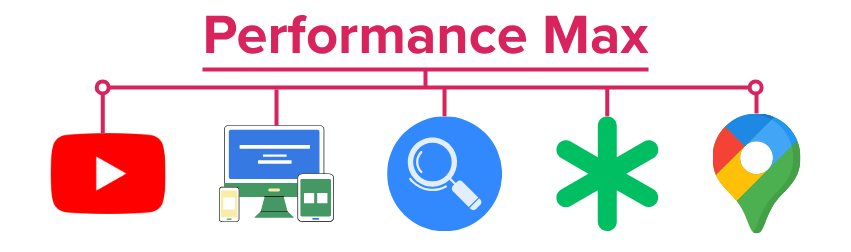
Performance Max, or PMax for those of us who don't feel like saying the whole thing every time, helps advertisers reach customers across Google's advertising channels, including Search, YouTube, Display, Gmail, and Maps.
Google's AI helps determine where ads appear, which audiences to reach, which creative assets to serve, and how to allocate bids toward your goals.
The upside? More opportunities to connect with customers across Google's ecosystem.
The downside? Less direct control can make it harder to understand exactly what's driving results.
And no, Performance Max isn't automatically the right answer for every business. It can be a strong fit for ecommerce companies with reliable purchase tracking, while a local service business focused on qualified calls and form submissions may benefit more from a well-structured Search campaign.
Sometimes, a combination makes the most sense.
More channels don't automatically mean more customers. The right channels, reaching the right people, with the right message? That's where things get interesting.
Smart Bidding: Let Google Handle the Bids. Keep the Strategy.
Smart Bidding uses Google's AI to adjust bids in individual auctions based on the likelihood of generating a conversion or conversion value.
Depending on your goals, you might use Maximize Conversions, Target CPA, Maximize Conversion Value, or Target ROAS.
Instead of manually adjusting bids all day, Google uses auction-time signals to make bidding decisions. Pretty convenient, right?
But there's one important catch: Google can only optimize toward the goals and data you give it.

If your conversion tracking is inaccurate, Google may optimize toward the wrong actions. If every form submission counts as a conversion, it may treat a low-quality inquiry the same as a valuable lead.
Smart Bidding can be incredibly effective, but it needs accurate tracking, realistic targets, and a clear understanding of what success looks like for your business.
Automation can handle the bidding decisions. It still takes a human to make sure those decisions support the bigger picture.
Google Ads Policy Checks: Because Getting Approved Is Part of the Game
You can build a fantastic campaign, write compelling ads, and have the perfect landing page ready to go. But if your ads, website, or business information don't meet Google's requirements, you could run into disapprovals, restricted ad serving, or even account suspension.
Google's policies cover everything from misleading claims and landing page requirements to industry restrictions and advertiser verification.
A few things worth checking regularly:
- Ad approvals: Are disapprovals keeping your ads from serving?
- Website compliance: Do your pages clearly represent your business, work properly, and provide the information customers need?
- Business information: Are your business identity, contact details, and website information consistent?
- Verification requirements: Does your industry or account require additional documentation or verification?
And here's a friendly reminder: passing Google's ad review doesn't mean you're in the clear forever. Policies change, and Google can review your ads and website again.
If you're experiencing disapprovals or verification issues, identify the specific requirement first. Sometimes the fix is simple. Other situations require a more thorough review of your website, business documentation, or account setup.
Either way, being proactive beats scrambling to figure out why your ads suddenly stopped serving.
The Part Nobody Wants to Talk About: Conversion Tracking
Clicks are great, but what happens after someone clicks your ad? Are they calling your business, submitting a lead form, or making a purchase? That's where conversion tracking comes in.
Accurate tracking helps Google understand which campaigns are driving results and gives its AI better information to optimize toward your goals. If the data is off, your campaigns could look successful on paper without delivering the leads or sales your business actually needs.
At RoShamBo Creative, we're not just looking for clicks. We're looking at what those clicks do for your business. Because the goal isn't more activity in a dashboard. It's more meaningful results.
Google Ads Best Practices: The Basics Still Matter

With so much attention on AI and automation, it's easy to assume success comes down to switching on the newest feature.
Not quite. The technology is changing, but a few things still make all the difference:
- Have a clear goal. Know what you want your advertising to accomplish, whether that's more leads, phone calls, or sales.
- Reach the right audience. More clicks aren't always better. Reaching people who actually need what you offer is what counts.
- Make a great first impression. Your ads and website should work together to communicate your value and make it easy for potential customers to take the next step.
- Focus on real results. A busy dashboard doesn't always mean a successful campaign. What matters is how your advertising contributes to your business.
At the end of the day, successful Google Ads isn't about doing more. It's about making smarter decisions with the budget you have.
So, What's the Right Google Ads Strategy for Your Business?
AI Max, Performance Max, Smart Bidding... there's no shortage of new tools and features to explore. But just because something is new doesn't mean it's right for your business.
The best strategy depends on your goals, your audience, your budget, and what success actually looks like for you. Sometimes that means embracing automation. Other times, it means refining what you're already doing.
The trick is knowing the difference.
That's where RoShamBo Creative comes in. We keep up with Google's ever-changing landscape, so you don't have to, combining smart strategy, thoughtful campaign management, and data-driven decisions to help your advertising work harder.
We're here to find the opportunities, make your budget count, and build campaigns that deliver meaningful results for your business. No chasing every shiny new feature. No throwing money at clicks that don't matter. Just a strategy built around what you want to achieve.
Ready to make your Google Ads work harder? Let's talk strategy, uncover the opportunities, and build a campaign that makes every dollar work toward your goals.

Written by Jessie Eckles
(Our Google Ads Guru)
Jessie blends strategy, creativity, and results like second nature. With a corporate communications degree and a passion for digital growth, she’s explored every corner of digital marketing and brand identity. From campaigns to conversions, Jessie makes brands show up and stand out.